
Thistle & Birch
Smart Automatic Pet Feeder
Smart Automatic Pet Feeder
Couldn't load pickup availability
There's a particular kind of guilt that comes with owning a pet and a calendar. The 6pm feed slips to 7:30 because a meeting ran long. Weekend mornings turn into a negotiation with a cat sitting on your chest at 5am. And if you've ever asked a neighbour to "just pop in and give him half a cup," you already know how loosely that instruction gets interpreted.
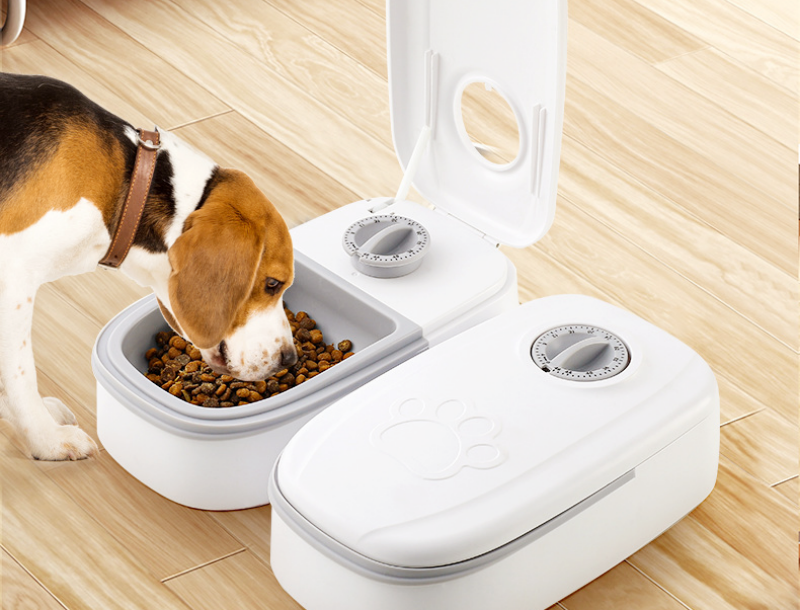
A smart automatic pet feeder solves a small problem that happens every single day. It holds dry food, releases a set portion at times you choose, and does it whether you're home, stuck in traffic, or still asleep. That's the whole promise, and for most households it's enough to change the shape of the day.
What it actually does
You load the hopper with dry food, program the times you want your pet fed, set how much comes out at each of those times, and the feeder handles the rest. Instead of one person remembering, the schedule remembers. Meals land at the same time every day, in the same amount, without anyone having to be standing in the kitchen.
The part people underestimate is portion consistency. Hand-scooping drifts. A generous scoop on a guilty evening, a light one when the bag is running low, a different hand entirely when someone else feeds. Over weeks that adds up, and it's usually why a vet visit ends with a conversation about weight. A feeder that dispenses the same measured amount each time takes the guesswork out of it.
Who this is really for
Busy pet owners, mainly. If your hours are unpredictable, or you're regularly out past dinner time, the feeder covers the gap without you having to arrange anything. Shift workers get the most obvious benefit: your pet's routine stops being tied to yours.
It also suits households where feeding responsibility is shared and therefore occasionally dropped. Nobody has to ask "did you feed him?" if the answer is automatic. And for pets who eat too fast on two big meals, splitting the same daily amount across three or four smaller drops is far easier to sustain when a machine is doing the splitting.
Multi-pet homes need a bit more thought. One feeder works well when a single animal eats from it, or when your pets genuinely share without one bullying the other off the bowl. If you have a fast eater and a slow eater, plan on separate feeding stations in different rooms.
Cats versus dogs
As a cat feeder, this tends to be a straightforward win. Cats naturally graze across the day rather than eating one large meal, so small frequent portions match their instincts better than the twice-daily routine most owners default to. It also puts an end to the pre-dawn wake-up campaign, because the food arrives on a schedule your cat learns quickly and then stops petitioning you about.
As a dog feeder, the main gains are portion discipline and covering the workday. Dogs tend to be more enthusiastic about the hardware itself, so placement matters more. Some dogs will investigate the hopper, nudge the unit, or try to speed things along. Position it against a wall, ideally in a corner, and keep an eye on it for the first week to see how your dog treats it.
Setting a feeding schedule that works
Start by working out your pet's current total daily food, then divide it across the number of feeds you want. Don't increase the amount just because you're adding more feeds. Two meals becoming four means each portion is half the size, not the same size.
A few practical notes from people who've done this:
- Keep one feeding time close to when you're usually home. It preserves the interaction, and it lets you see how much is actually being eaten.
- Space feeds far enough apart that the bowl is empty before the next drop. Food sitting for hours defeats the point.
- Change the schedule gradually. Shifting a meal by fifteen minutes a day is easier on a pet's digestion (and their patience) than a two hour jump.
- Give it a week before judging. Most pets take a few days to trust that food will arrive without them asking.
Versus the obvious alternatives
The cheapest alternative is a gravity feeder, which is really just a hopper that keeps a bowl topped up. It never runs out, but it also never stops, so free-feeders eat as much as they like. If your pet self-regulates, gravity feeders are fine. Most don't, particularly cats and food-motivated dogs.
The other alternative is a person: a neighbour, a friend, a paid sitter. People are better than machines at noticing when something's wrong, and you should still arrange a check-in for longer absences. But for the daily routine, a person is expensive, inconsistent, and dependent on someone else's schedule. A feeder handles the repetitive part so a human visit can be about attention and water rather than food logistics.
The last alternative is doing nothing and adjusting your own life around feed times. Plenty of people do it. It works until it doesn't, usually on the day something runs late.
Build and food safety considerations
Look at a feeder as three things that need to work: the hopper that holds food, the mechanism that moves it, and the bowl it lands in. The hopper wants a lid that seals well enough to keep food from going stale and to discourage a determined nose. The mechanism is where reliability lives, and it's why the dispensing path should stay dry.
This matters for cleaning. Wipe the hopper and the internal path rather than submerging the unit, and let everything dry completely before you refill. Damp food sticks, and stuck food is the number one cause of a missed meal.
Food type matters too. These feeders are built for dry kibble of a fairly consistent size. Very large biscuits can bridge across the opening; very small or oddly shaped pieces can pack down. Wet food doesn't belong in a hopper at all. If you feed a mix, use the feeder for the dry portion and serve wet food by hand.
Where to put it
Pick a flat, level, hard floor. Carpet and rugs let the unit rock slightly and make spills much harder to deal with. A corner or an alcove is ideal because it limits how much a curious pet can push the thing around.
Keep it away from the radiator, direct sun, and the steamy zone next to a dishwasher or kettle. Heat and humidity are what turn kibble stale and greasy. A utility room, hallway, or quiet corner of the kitchen usually works well. Give yourself enough clearance to lift the lid and refill without moving the whole unit, and place the water bowl nearby but not so close that splashes reach the dispenser.
If your pet is nervous, put the feeder where they already eat rather than introducing a new location at the same time as a new object. One change at a time.
Living with it day to day
The realistic routine is: refill the hopper when it drops to a third, wash the bowl as often as you would any pet bowl, and give the hopper and dispensing path a proper wipe-down every couple of weeks or whenever you switch food.
Check the bowl daily even though you're not filling it. Uneaten food is the earliest signal that something's off with your pet, and it's easy to stop looking once feeding is automated. Handing over the scoop shouldn't mean handing over the observation.
Before any trip, do a dry run. Confirm the schedule, watch at least one dispense happen, and leave the hopper properly full rather than judged by eye. It's a two minute check that prevents the one problem you'd actually worry about while away.
Worth knowing before you buy
An automatic pet feeder is not a substitute for supervision, and it doesn't replace fresh water, which needs its own arrangement. What it does is take one recurring daily task, make it consistent, and remove it from your mental load. For most households that's the difference between a routine you manage and a routine that manages itself.
If you've been feeding by hand and by memory, the change is immediate. Your pet eats on time, the portions stop drifting, and the 6pm scramble simply stops happening. That's a modest ambition for a piece of pet equipment, and it's exactly why it earns its place among genuine pet essentials.
Part of our Pet Supplies collection.
Share
Shipping & Returns
Shipping
Standard shipping is $8, and free once your order clears $70 — shown at checkout, no surprises. Full shipping policy
Returns
Not the right fit? You have 30 days from delivery to send it back, no hassle. Full return policy